Yoga for Lower Back Pain: 8 Gentle Poses for Desk Workers
Most lower back pain that builds across a working day is not caused by one bad movement. It comes from repeating the same one for hours: hips flexed, weight forward, glutes switched off and the lumbar spine quietly holding the slack. By mid-afternoon the ache has settled in, and by the evening the idea of a full yoga class feels like hard work.
The sequence below takes about fifteen minutes and needs nothing more than a mat, a cushion and enough floor space to lie down. Every pose suits a beginner, and each one comes with a way to make it smaller if your back is sore or your hamstrings are tight.
Why Desk Work Leaves the Back Tight
The hip flexors run from the front of the thigh up to the pelvis and the lower spine. Keep the hips bent for six hours and those muscles stay short, which tilts the pelvis and adds pressure through the lower back. Meanwhile the glutes, which should be helping to support the spine, spend the day stretched and idle. Add a head that drifts towards the screen and the whole chain from neck to sacrum works harder than it should.
None of that makes sitting dangerous. It simply means the muscles need regular reminders of their full range. A short, consistent practice does that better than an occasional long one.
Before You Begin
Five rules keep this safe and useful:
- Move into a gentle stretch, never into sharp pain. A mild pulling sensation is fine; a pinch, stab or electric feeling means stop.
- Keep breathing slowly. If you are holding your breath, the stretch is too much.
- Hold each pose for five to eight slow breaths, or about thirty seconds, and come out sooner if you want to.
- Support yourself. A cushion under the hips, a folded towel under the knees and a book under the hands make most of these poses easier.
- Skip whatever does not feel right today. Bodies change day to day, and a shorter practice you actually do beats a longer one you avoid.
If you have a diagnosed back condition, have had surgery recently, or are pregnant, check with a GP or physiotherapist before starting.
The Sequence: Eight Poses for a Stiff Lower Back
Work through the poses in order where you can. The sequence moves from resting to gentle movement and back again, which is why it tends to leave the back feeling better rather than merely stretched.
1. Crook-Leg Rest
Lie on your back with knees bent, feet flat and hip-width apart, arms relaxed by your sides. Let the lower back soften towards the floor. If it feels exposed, slide a cushion under the hips or rest the calves on the seat of a chair. Stay two to three minutes, breathing slowly. Everything else builds on this.
2. Knees to Chest
Draw both knees towards the chest, holding the shins or the backs of the thighs. Keep the tailbone heavy and the shoulders down. Rock gently side to side if that feels good, or hold one knee at a time. Five to eight breaths.
3. Cat–Cow
Come onto hands and knees, wrists under shoulders and knees under hips. Inhale to drop the belly and lift the chest and tailbone; exhale to round the spine and tuck the chin. Let the movement start at the pelvis rather than the shoulders. Eight to ten slow rounds. If kneeling is uncomfortable, do the same movement seated on a chair with hands on your knees.
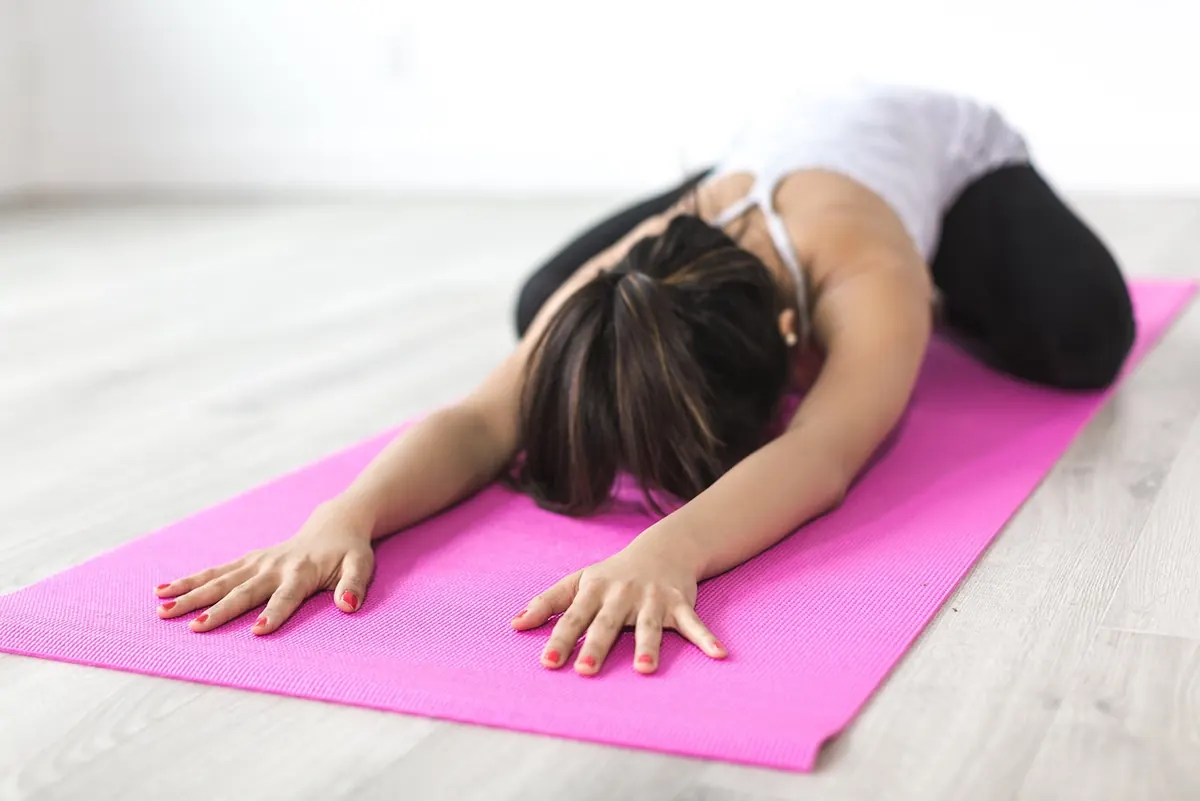
4. Child's Pose
Take the hips back towards the heels with the knees wide, forehead resting on a cushion or the mat. Arms can stretch forward or rest alongside you. Breathe into the back of the ribs and let the lower back widen. One to two minutes.
5. Sphinx
Lie on your front with elbows under the shoulders and forearms on the mat. Press the pubic bone down and lengthen the lower back rather than forcing the chest up. Sphinx is milder than a full cobra and kinder to a sensitive lumbar spine. Three to five breaths.
6. Low Lunge
From hands and knees, step the right foot forward between the hands and slide the left knee back onto a folded towel. Keep the hips level, tuck the tailbone and press gently forward until the front of the left hip opens. Five breaths, then swap sides. If kneeling hurts, do a standing version with the back heel lifted and both hands resting on the front thigh.
7. Reclined Figure Four
On your back with knees bent, cross the right ankle over the left thigh. Thread the right arm through and clasp behind the left thigh, or loop a towel around it. Flex the right foot. The stretch should sit in the right glute, not the knee. Five to eight breaths on each side.
8. Supine Twist
Staying on your back, let both knees fall to the right while the shoulders stay on the floor. Turn the head to the left or keep it neutral, whichever is comfortable. If the knees do not reach the floor, support them with a cushion. Five breaths each side, then lie flat with the legs long for a minute.
Fitting It Into a Working Day
Long practices get skipped, so treat the full sequence as the ideal rather than the standard. A simple pattern works well:
- Morning: cat–cow and knees to chest before you sit down. Four minutes.
- Mid-afternoon: stand up, do a low lunge on each side and a slow forward fold with bent knees for thirty seconds.
- Evening: the full sequence, or legs up the wall for five minutes if you are too tired for anything else.
A timer helps. So does leaving your mat out where you can see it, because rolling it away is the fastest way to stop practising.
When to Seek Advice
Gentle movement is
Photo: StockSnap / Pixabay
Common Yoga Mistakes Beginners Make (and How to Avoid Injury)
New to yoga? Learn the alignment, breath and prop habits that prevent injury, plus how to rest well and...
A Seasonal Guide to Holistic Wellness in the UK: Spring, Summer, Autumn, Winter
Small seasonal adjustments to food, movement, meditation and rest can keep you well through the British...
About Us